
Jamming the wheel
Introduction
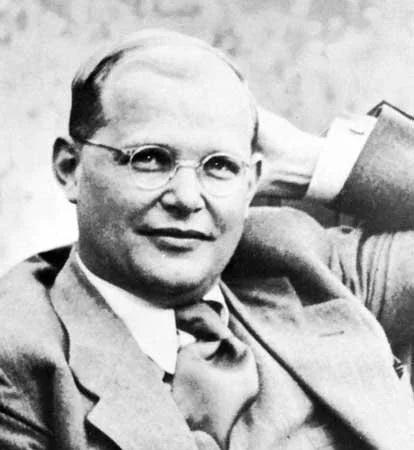
On 9th April 1945, as World War II was drawing to a close, theologian Dietrich Bonhoeffer was executed under the direct order of Hitler.
Pastor Dietrich Bonhoeffer
German born and raised, he had steadfastly opposed Nazi dictatorship and championed Christian discipleship despite the high cost. His participation in rescuing Jews, his refusal to cooperate with the nazification of the German Church, and his links to Operation Valkyrie eventually led to his downfall.
After being arrested in April 1943, he spent the next two years in detention. Firstly, in Tegel Prison, Berlin awaiting trial. Then he was sent to Buchenwald concentration camp. And finally he was transferred to Flossenbürg for a quick show trial. He was hanged the very next day, on 9th April 1945, just one month before Germany surrendered. During his detention he suffered both physically and psychologically; the manner of his death was also possibly more cruel than some biographies state.
During his time in prison he lived a life devoted to Christ, sharing God’s offer of salvation with fellow prisoners and prison officers. He also wrote fervently to friends, family, and his fiancée. Posthumously many of his letters and replies were compiled into a book, Letters and Papers From Prison. Reading this correspondence is both encouraging and humbling.
Considering the suffering
Bonhoeffer understood suffering more than most.
First of all, like the first disciples, he knew that he might be called upon to suffer for his faith in Jesus Christ who Himself was tortured and executed on Good Friday:-
Then he [Jesus] said to them all: “Whoever wants to be my disciple must deny themselves and take up their cross daily and follow me.”
(Luke 9:23)
Blessed are those who are persecuted because of righteousness, for theirs is the kingdom of heaven.
(Matthew 5:10)
And indeed, that faith in Christ did lead to his own suffering and death. So you might say that he gained lived experience of these gospel passages. Despite his own suffering though, he had sufficient presence of mind to reflect on the suffering of others:-
We must learn to regard people less in the light of what they do or omit to do, and more in the light of what they suffer.
(Letters and Papers from Prison)

Many patients enter the criminal justice system homeless, traumatised, addicted to drugs or alcohol, and showing challenging behaviour
How true. Yet how often do we fail to evaluate people in light of their past, their trauma and their suffering, rather than reacting directly to their offensive words and challenging behaviour?
In medicine we are privileged to see people at the very beginning and end of their lives. We also bear witness to heart-breaking moments and life-changing situations. Human beings are fragile. In times of tension, emotions run high. Unpleasant outbursts happen, filled with anger and blame. And some patients turn repeatedly to vices we wish they would stop for the sakes of their health and family.
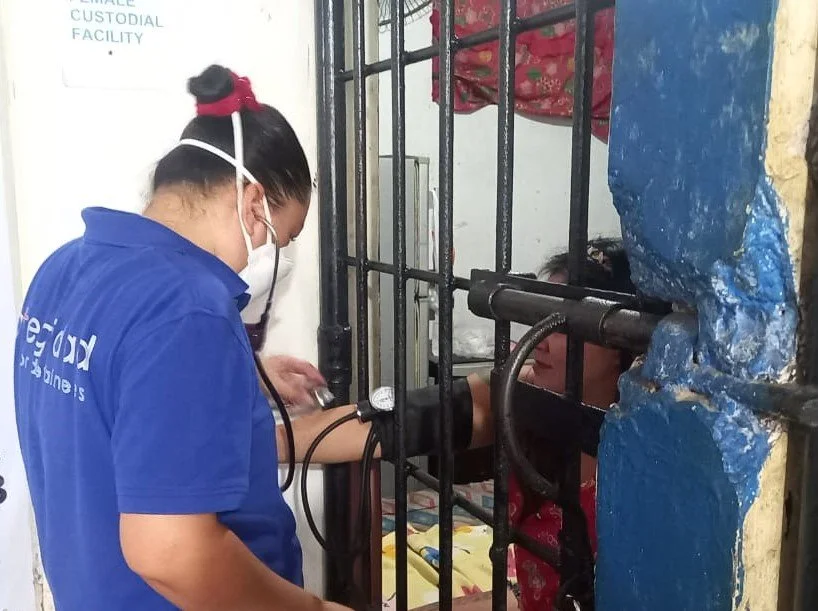
Giving a detainee patient-centred care
All patients are children of God, valued and respected by Him. A good healthcare professional sees beyond what their patient is doing or saying, choosing instead to view their behaviour or words through the lens of their troubles.
And outside of the healthcare arena, we should be challenged by this piece of wisdom. We need to look for the inestimable worth and dignity of our fellow human beings. Let’s give one another respect, whether we are free or behind bars.
Jamming wheels
Also whilst behind bars, Bonhoeffer wrote what may be his most famous quotation:-
We are not to simply bandage the wounds of victims beneath the wheels of injustice, we are to drive a spoke into the wheel itself.
(Letters and Papers from Prison)

Torture wheel
This sentence encapsulated all that he lived for. He did not simply write and teach on the morals and ethics of the Christian life. He lived it too. His firm belief was not just in helping those crushed by the weight of this world’s injustices, but in radically intervening for the oppressed and averting the course of injustice so as to stop ‘the wheel of injustice’ from moving on to crush others - whether literally or metaphorically - in the future. And it cost him his life.
Detainees are one of the world’s most vulnerable patient groups. Without their freedom, they have very little power to express their rights. And in many countries detainees who are unwell, disabled, poor or from a minority background are especially vulnerable.
As a medical organisation with a heart for detainees, we at Integritas Healthcare are all too familiar with wounds in need of bandaging. Whilst performing holistic healthcare, we also see the overwhelming need to advocate for our detained patients and to take a stand against the injustices many of them are facing. Moreover as a Christian faith-inspired organisation, we will be forever encouraged by the example of Pastor Dietrich Bonhoeffer. Advocacy is not a choice. God doesn’t invite us to do it. Rather, He commands it:-
Speak up for those who cannot speak for themselves, for the rights of all who are destitute. Speak up and judge fairly; defend the rights of the poor and needy.
(Proverbs 31:8-9)
This article was first written for a previous anniversary of Bonhoeffer’s death, by then clinical fellow Dr Esme MacKrill with Dr Rachael Pickering. It underwent a light edit before republication on 9th April 2026.
Speak up for those who cannot speak for themselves…
Proverbs 31:8-9