

Quality improvement project
Protecting our personnel from tuberculosis
Background
Right from the start of our healthcare and training services, we have prioritised the safety of our personnel working in places of detention (PoDs). Appropriate face masks have been provided and their use implemented as part of our existing occupational health (OH) and infection prevention measures.
Tuberculosis (TB) is an important OH risk within PoDs. The Philippines has one of the highest TB burdens in the world, and PoDs are associated with an increased risk of TB transmission due to factors including overcrowding, poor ventilation and prolonged close contact. TB within PoDs is therefore an important public health concern around the globe. [1,2] Appropriate respiratory protection is an important measure to reduce occupational exposure and transmission.
FFP3-grade face masks have always been in ready supply and their use established as part of our long-term safety measures.
Still, informal observations and photographic evidence suggested that they were not worn consistently but no formal quality improvement project (QIP) had assessed compliance or addressed the reasons why masks were not consistently worn.
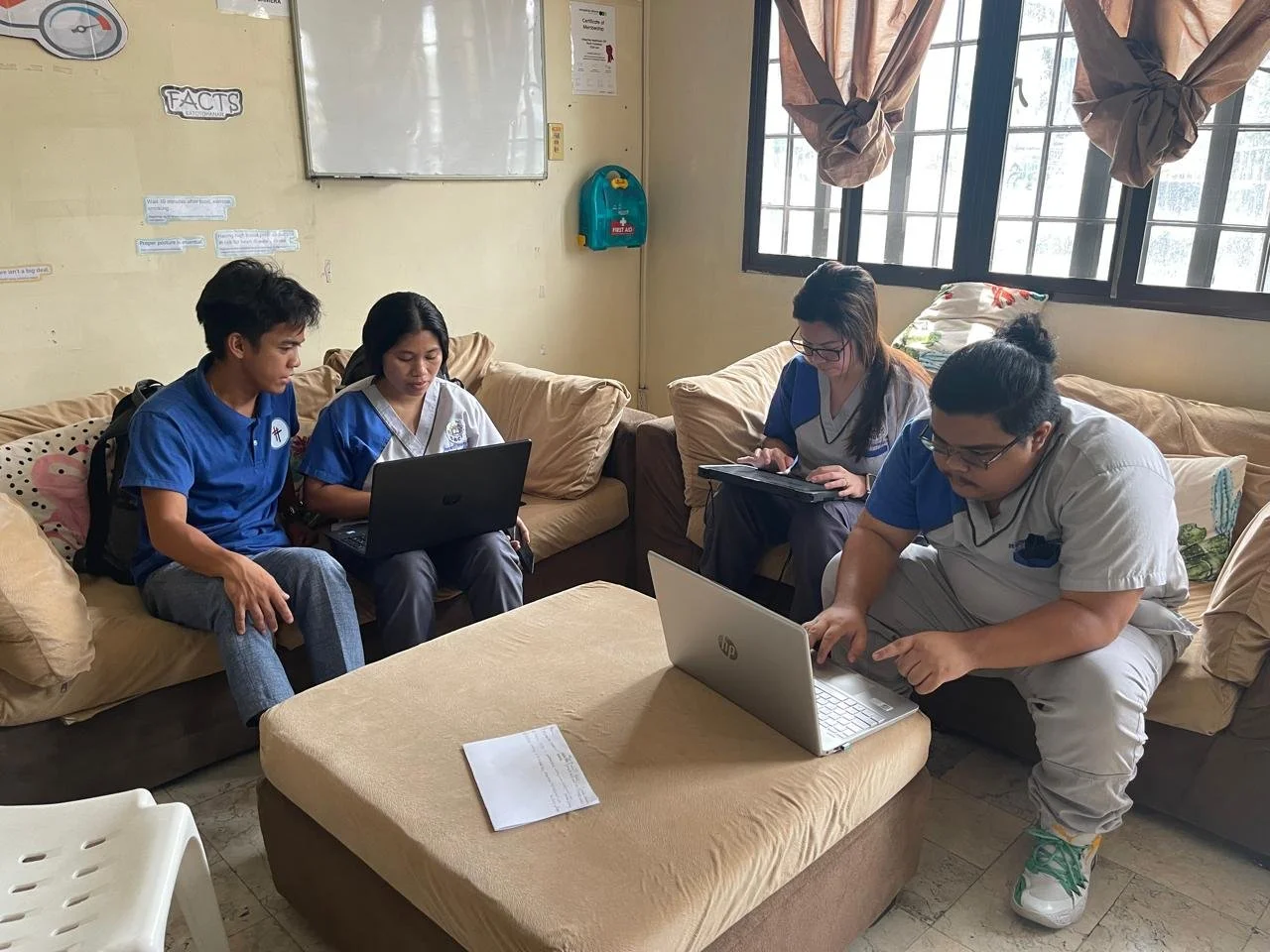
Staff member Sir Jonathan (left) assisting some of the June OJTs (coming on board as short-term personnel) with learning including the correct use of PPE
Plan
Plan’s objective: using educational and monitoring means, improve our personnel’s compliance with the wearing of appropriate personal protective equipment (PPE) against TB within PoDs.
Specific: yes:-
monitoring: observation in person and through pictures;
training:-
presentation about TB, focussing on transmission rate and improvement through protection,
video project for our On-the-Job Trainees (OJTs);
Measurable: yes:-
pre-QIP: pictorial evidence in photographs of personnel without masks;
start of QIP: observation during week one, counting percentage of personnel wearing masks;
end of QIP: observation during week six, counting percentage of personnel wearing masks.
Achievable: yes:-
scope: narrow;
success: deemed if there’s an improvement in mask compliance in week six compared with week one.
Relevant: yes:-
TB is endemic in the Philippines in general; [1]
the Philippines is among the countries in Asia with a high burden of multidrug-resistant TB (MDRTB); [3]
TB within PoDs (both in the Philippines and worldwide) is a hot public health issue. [2]
Time-defined: yes, six weeks.
Personnel: led by Dr Rebekka Huebner (RH), supervised by Dr Rachael Pickering.
Do

RH holding a TB awareness workshop with some of our personnel
Do the project:-
Intervention: teaching sessions for our regular staff and four current OJT nurse assistants covering:-
overview of TB;
airborne mode of transmission;
risk in closed settings such as PoDs;
importance of PPE in reducing occupational exposure and transmission;
overview of FFP2 vs FFP3 masks and correct usage (donning/doffing);
conducted informal baseline assessment of existing knowledge and attitudes towards PPE use.
Video made by OJTs and supervised by RH
Material: short educational video developed by OJTs under supervision including the following topics:-
TB basics (pathophysiology, transmission and risk);
PPE focus (mask types, correct fitting and indications for use);
TB in PoDs (epidemiology, overcrowding, ventilation and increased transmission risk).
Monitoring:-
direct observation of PPE compliance during clinical and non-clinical duties;
photographic documentation of mask use in custodial environment;
compliance surveying (mask worn vs not worn).
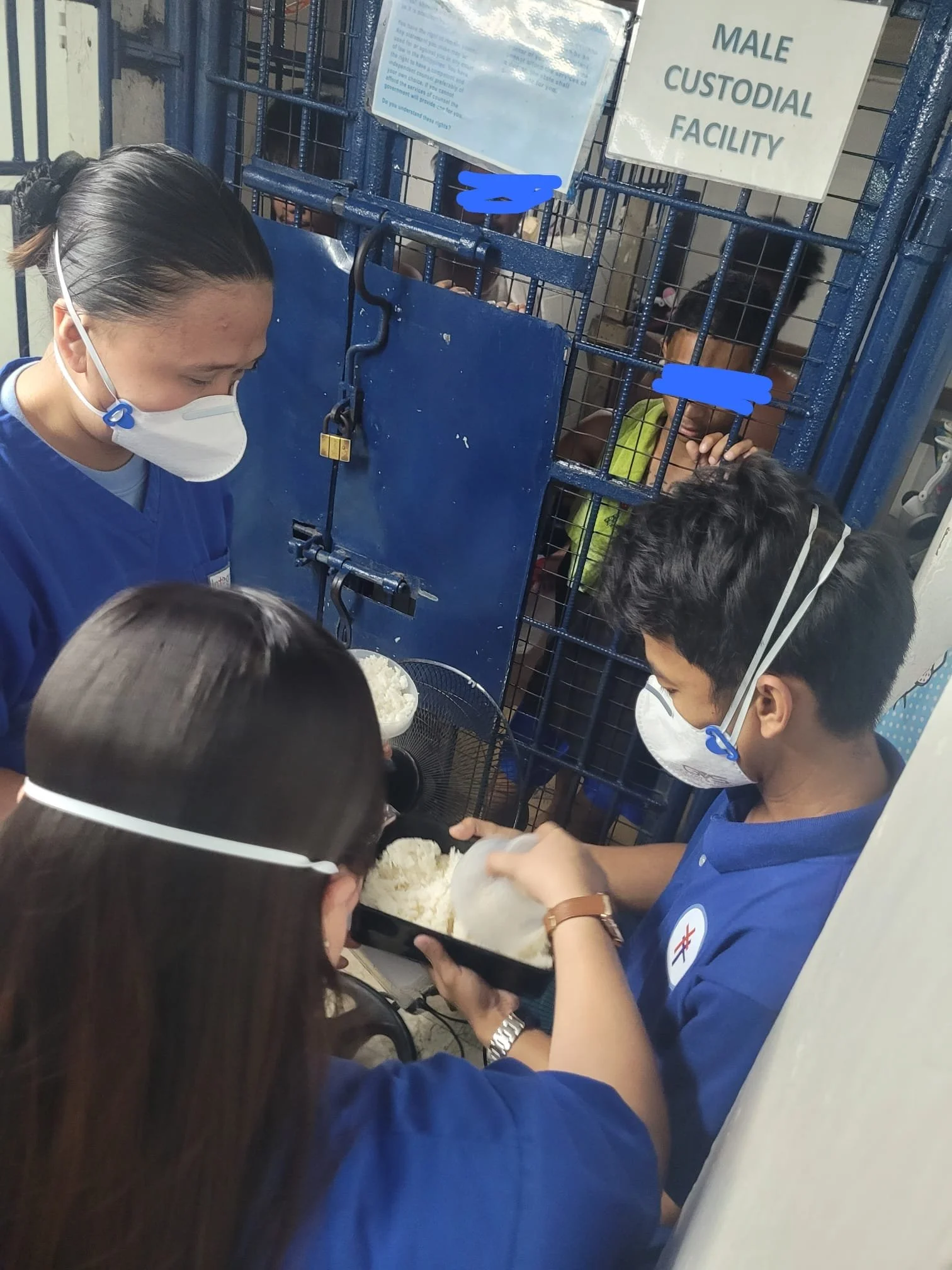
Personnel during week 6, all correctly wearing FFP3 masks within a police station
Detail any problems:-
objective assessment of PPE compliance was challenging, as personnel behaviour appeared to be influenced by RH’s presence;
one permanent staff member who had frequently been observed not wearing a mask during the baseline period was not present during week 6.
Study
Study the data:-
Week 1: mask compliance of personnel was observed to be ~70%:-
inconsistent PPE use was observed between different staff members;
the lowest compliance was during non-clinical interactions and in corridors;
there was better compliance when the observer/clinical lead was present.
Week 6: mask compliance of personnel was observed to be 100%:-
this was a relative improvement of 42%;
this improved figure may have been affected by the absence of the less compliant staff member who had been present during week 1;
during one non-clinical interaction (distribution of food as part of our feeding program), the masks were not brought along, though this was realised and masks were sent for before entering the PoD.
Summarise our learning:-
observed compliance may not accurately reflect routine practice, particularly in a small team where individual staff behaviour can substantially influence overall compliance rates;
education improved awareness but did not fully eliminate inconsistent behaviour;
behavioural change was influenced strongly by supervision and environment rather than knowledge alone;
wearing of masks remains unpopular and will require ongoing monitoring.
Act
Actions already made:-
FFP3 masks are now stored within the medicine bags carried by the team, ensuring that masks are readily accessible before entering poorly ventilated areas within police stations. This avoids the need to open the medical equipment case outside the facility solely to access PPE.
FFP3 masks are also stored in the food bags to ensure that masks are readily available during the feeding programme.
Mask compliance expectations have been incorporated into the induction process for new OJTs, including showing the educational video created during this QIP and emphasising the importance of appropriate PPE use in TB-risk environments.
Visual reminders have been introduced by attaching signs stating “Wear a mask in closed areas with poor ventilation” to the equipment bags as a prompt before entering higher-risk areas.
Additional action(s) required:-
Continue monitoring compliance, particularly during the non-clinical interactions as the weekly feeding programme, where masks were more likely to be forgotten.
Repeat audit at six-monthly intervals.
Consider periodic refresher training sessions.
Explore anonymous feedback to identify barriers to mask use.
References
1. Parreño SJE. Long-Term Trend Analysis of Tuberculosis Cases in The Philippines from 2016 To 2023. National Journal of Community Medicine. 2026 [cited 2026 October 2]. Available from: https://doi.org/10.55489/njcm.170620265425
2. Martinez L et al. Global, regional, and national estimates of tuberculosis incidence and case detection among incarcerated individuals from 2000 to 2019: a systematic analysis. The Lancet Public Health, 8, e511 - e519. 2023 [cited 2026 October 2]. Available from: https://doi.org/10.1016/s2468-2667(23)00097-x
3. Phelan J et al. Mycobacterium tuberculosis whole genome sequencing provides insights into the Manila strain and drug-resistance mutations in the Philippines. Scientific Reports, 9. 2019 [cited 2026 October 2]. Available from: https://doi.org/10.1038/s41598-019-45566-5
4. Hawthorne Effect. Wikipedia. 2026 [cited 2026 October 5]. Available from: Hawthorne effect - Wikipedia
…let the wise listen and add to their learning,
and let the discerning get guidance…
Proverbs 1:5