
Prisons + Health + Care
Pray for us
Prisons Week
History
For the last half century, the week following the second Sunday in October has been designated as Prisons Week:
Prisons Week wants to see an end to the human suffering caused by crime and imprisonment – for all those affected. We believe that faith moves mountains, and that prayer moves God. We also believe that when we pray with faith God often moves us to be the answer to those prayers.
(Prisons Week)
All are invited
This year’s Prisons Week video
This year’s Prison Week theme is ‘All are invited’. It’s based around Jesus’ Parable of the Wedding Banquet. In this particular narrative, Jesus was emphasising that, no matter how many really bad things we have done, God still loves us and wants us to come to Him.
The theologian N T Wright put it so: ‘Jesus’ love reaches us wherever we are but refuses to leave us as we are’.
Health + Care Sunday
This year’s Health + Care Sunday video
This year, it just so happens that Prisons Week fades into Health + Care Sunday, which is held on the Sunday nearest to St Luke’s Day - 18th October, a date that coincidentally means a lot to me. This is when both the Roman Catholic and Anglican Churches remember Luke the Evangelist.
Not only was Luke one of great evangelists of the Early Church and the author of the Gospel of Luke, but he also happened to be a First Century physician - hence his relevance to the world of healthcare.
Putting it all together
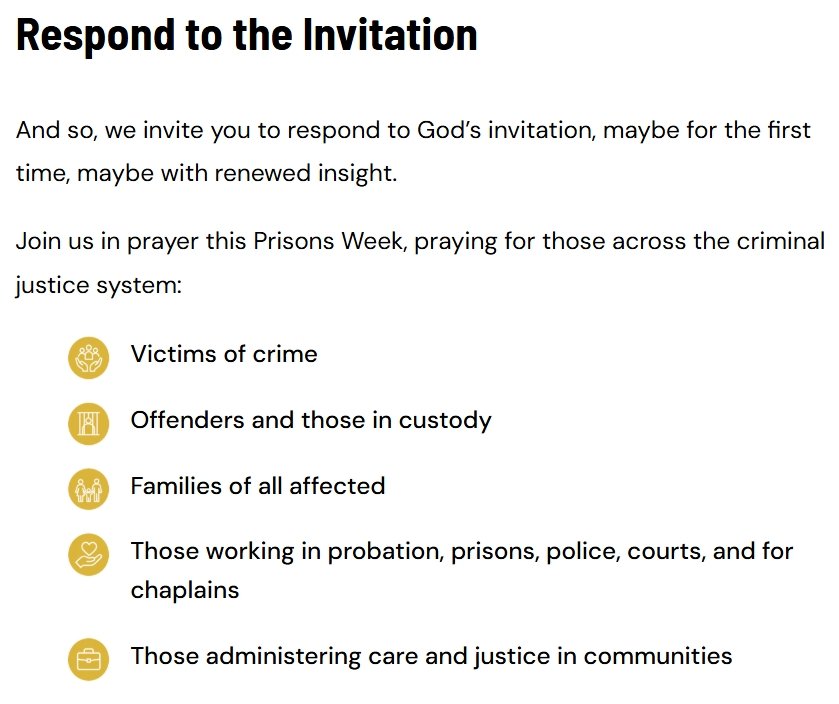
This year’s Prisons Week prayer points
This year Prisons Week invites you to pray for ‘those working in probation, prisons, police, courts, and for chaplains’.
But please remember that this includes healthcare professionals working behind bars.
We are incredibly placed to reach those who feel farthest from and least eligible to accept God’s invitation to the banquet.
Yet we can also be vulnerable ourselves, doing a job that few seek out and many fear.
‘Sad ram’
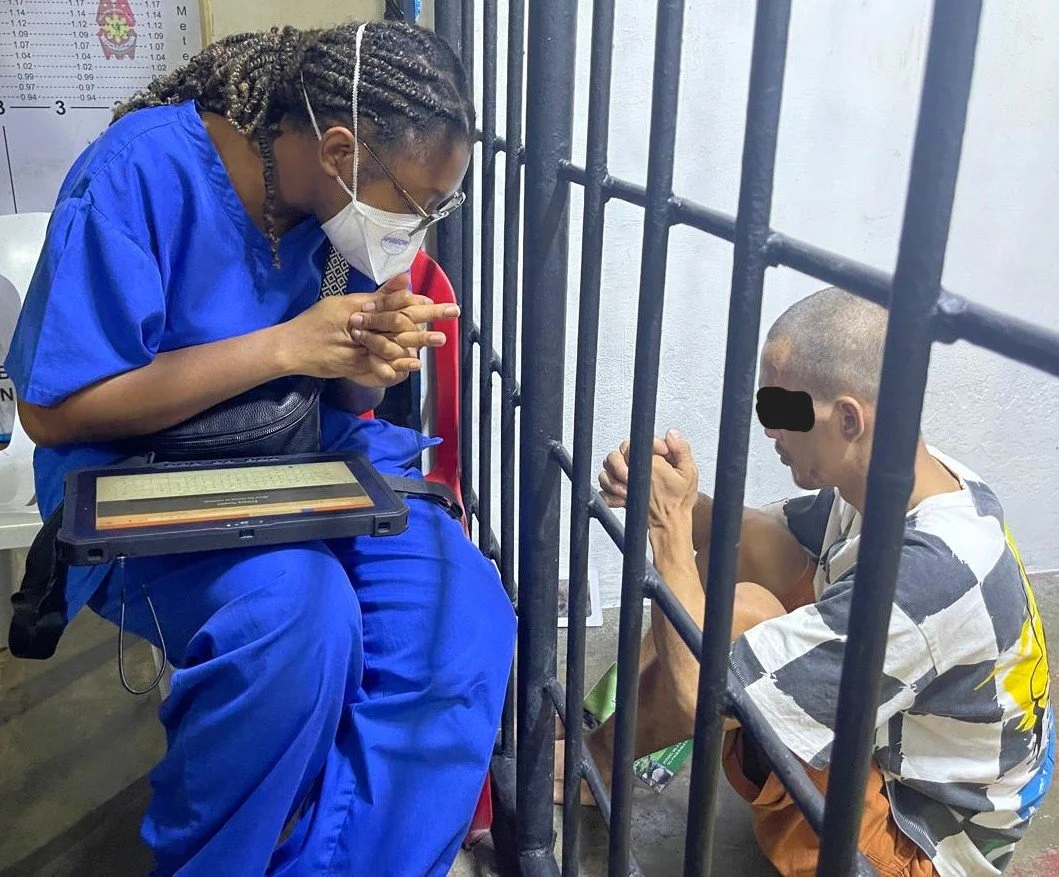
I recall a gentleman I cared for one evening this Prisons Week, in my non-Integritas capacity as a general practitioner (GP) working part-time within London’s offender healthcare service…
He’d just arrived for his tenth time in prison. After a few months of living on the streets, he’d spent the previous three nights in a police station without any treatment for his drug addiction, before a morning in court followed by four hours locked in a tiny box on wheels before finally reaching the prison in which we met.
Like many of his peers, he was incredibly challenging to serve with healthcare. As I often train my offender healthcare students to remember it, he behaved like a RAM:
Rude: he was sexually inappropriate and then told me to f*** off, when I tried and failed to get him off the floor and into my consulting room.
Aggressive: later during my assessment, he raised his fists to me in response to me telling him that I wouldn’t be giving him the high dose of methadone he wanted.
Malodorous: his skin was dirty from life on the streets, and his clothes were stained with dried vomit, urine and faeces because drug withdrawal can cause uncontrolled bodily emissions.
Yet he was also very SAD:
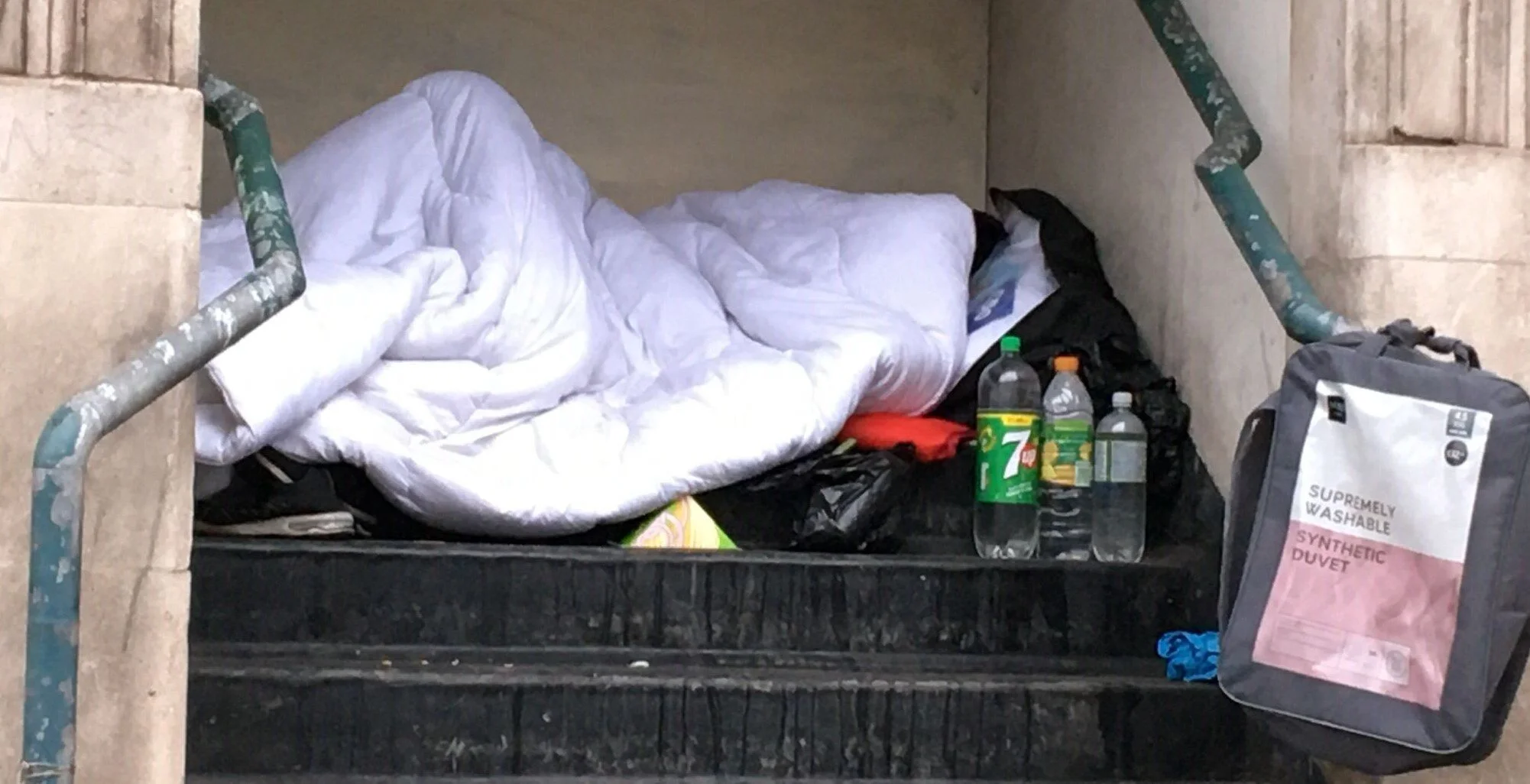
Many addicted prisoners come into prison with a variety of other illnesses caused or exacerbated by homelessness
Sorry & Sick: later in the evening though, after a (small) dose of methadone and other medicines to help his body cope with the ravages of heroin withdrawal, he knocked on my door and apologised most sincerely for his earlier behaviour. This chimes with my general experience: when not acutely withdrawing or otherwise seriously unwell, the vast majority of prisoners are so very grateful for being provided with a good standard of basic healthcare. And now that he was calmer, I was able to examine his lungs, diagnose him with pneumonia and give him the necessary treatment for this.
Anxious: on top of the anxiousness that goes hand-in-glove with chemical addictions, facing serious criminal justice charges would make anyone anxious! We sat and talked. How could he respond constructively to his situation, rather than going out of his mind with worry? I asked him if he had a faith that helped him at a time like this. Yes, he was a lapsed Christian and he very much wanted to re-explore this. So I reminded him that the Bible encourages us to ‘Cast all your anxiety on him [Jesus] because he cares for you’. With his agreement, I said a prayer with him. And then I sent him onto his prison cell with an extract from the Gospel of Luke (taken from the prison chaplain’s literature table) to read and the thought that, even from the depths of his prison cell, God was available to him through prayer 24/7 to discuss his anxieties. Human beings are mind, body and soul. So spiritual care is an essential facet of whole person (holistic) healthcare.
Dependent: I’m so grateful for having been born to loving parents who were themselves equipped to raise me in a manner that made me fully prepared for independent adult life. In contrast, when caring for prisoners, it’s important to remember that they may not have had such a perk. Often they have been raised in varying degrees of chaos and so, rather than graduating into fully autonomous adulthood, they wander through life with significant degrees of unmet dependency. In addition, by its very definition, imprisonment removes even theoretical autonomy. Consequently, sick prisoners often need a high degree of signposting. So I ended my second consultation with this gentleman by signposting him to various services: the chaplain for further spiritual support, fellow prisoners trained in listening skills for day-to-day support, the drug and alcohol team for specialist support over the coming weeks and months, the on-call nurse if things hit a physical or mental crisis, and an appointment with me or one of my doctor peers for a holistic healthcare review in the coming days.
Such are the complexities of offender healthcare. Just like the rest of us, prisoners are made in God’s image and so are entitled to human rights, a good standard of care, and respect. Generally they don’t need difficult or advanced medicine, though previous breaks in care and the argy-bargy some of them bring to consultations do make for a drain on both time and energy. Overall, it’s a (sometimes tiring) privilege to care for each of them.
Please do pray

Thank you for praying
Integritas Healthcare has particular prayer needs. But also, please do pray for all Christian healthcare professionals serving anywhere in our world’s offender healthcare systems:
For us as individuals as we seek to be The Great Physician’s hands and feet behind bars - for safety, courage and stamina.
For new blood - for fresh-faced, skilled and compassionate colleagues.
For more fellow believers - Christians often make ideal offender healthcare professionals. If this describes you, why not have a think and pray about taking the plunge? And do get in touch if you want some advice.
Dr Rachael Pickering is our Chief Medical Officer
18th October 2026 (minor edits 19th October)
I was sick… and in prison and you came to visit me
Matthew 25:36