
Christa Pike
Not-dead woman walking
Single drug non-execution
On the evening of 30th September 2026, a new low was set on American death row. Though the pentobarbital one-drug protocol had already been withdrawn from Federal use due to concern about causing unnecessary pain and suffering, the State of Tennessee went ahead and used it on a condemned woman called Christa Pike. Their particular policy permits it to be used twice in an emergency. And so, when she was still alive after a first dose, they gave her the back-up shot. But still she did not oblige by dying...
Duty of care
The American prison system has a legal obligation to provide healthcare to every single detainee housed under its roofs. In theory but never before put into practice, this duty extends to survivors within its execution chambers!
So, when Christa did not succumb in the expected manner, therapeutic medical assistance had to be called in. She was taken to a local hospital for intensive care.
Following initial concerns that she may be brain dead, she woke up and started talking and walking! She sustained severe damage to her arms from where the pentobarbital leaked out of her veins, and it’s not yet known whether she sustained brain damage. And then, just ten days after the failed execution, she was returned to jail.
Fall out
There’s all manner of fall out going on. Quite rightly, the Governor of Tennessee has called a halt to this year’s executions and the Commissioner for the Tennessee Department of Correction has resigned. Meanwhile, Christa’s legal team are petitioning for her to be spared any future attempts at execution.
But whilst all this wrangling is going on, let’s look at Christa Pike as an individual, rather than as a now infamous survivor of execution…
Horrific crimes
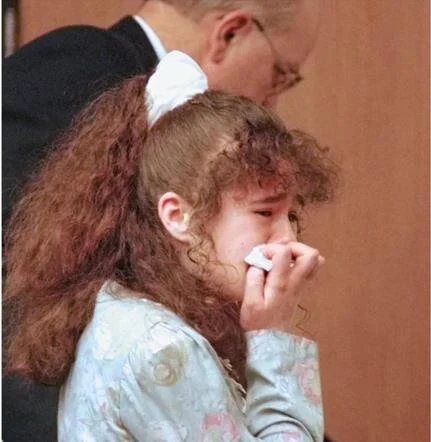
Christa being led away from the court room, after hearing her death sentence
Just over 30 years ago, then 18 year old Christa and her very slightly younger boyfriend murdered classmate Colleen Slemmer. In a jealousy-fuelled assault that escalated out of control, Colleen suffered a particularly cruel death.
The assailants were quickly caught and tried. Being on the junior side of 18 at the time of their crime, the boyfriend was barred from receiving a capital sentence.
Christa herself admitted killing Colleen. Yet her own youth and victimhood - having been neglected and serially abused, and the effect this may have had on her thinking and actions - were not considered during her trial and sentencing. Since being convicted, she has been diagnosed with bipolar mood disorder and post-traumatic stress disorder. Young adults like her and their ill-considered actions do not just appear out of a vacuum. Furthermore, she was not afforded attorneys with experience of defending capital cases.
Prolonged solitude
Following that 1990s conviction as a young adult, Christa sat in a tiny box room in a Tennessee prison and simply marked time into middle age. This is because American death rows are notoriously long stays and conditions are those of solitary confinement. The United Nations’ definition of prolonged solitary confinement makes for interesting reading:
For the purpose of these rules, solitary confinement shall refer to the confinement of prisoners for 22 hours or more a day without meaningful human contact. Prolonged solitary confinement shall refer to solitary confinement for a time period in excess of 15 consecutive days.
(Mandela Rule 44)
And it’s worth considering that Christa’s spent almost three decades in solitary confinement, which is well over 700 times this 15 day limit! All the while, the threat of execution was looming ever nearer and her particular restrictions were even harsher than those of men. Pre-execution, UN experts condemned this sorry state of affairs:
Pike’s execution would mark the culmination of a trajectory of severe physical and psychological suffering marked by childhood abuse and nearly three decades of solitary confinement on death row…
The extraordinary duration of Pike’s isolation on death row, her detention conditions, compounded by her vulnerable situation and prolonged awareness of her impending execution, amounts to torture.
The absence of appropriate facilities for women cannot justify discriminatory treatment of women or harsher conditions for them than for men in a similar situation.
Why (or why not)?
Capital punishment is a divisive subject. It’s my personal opinion that the death penalty is never right. Here are some of the factors I considered before reaching this conclusion:
firstly and most pertinent to the events of 30th September, execution processes are becoming ever more complex (eg nitrogen asphyxia) and medicalised (eg lethal injection) but are still open to the very high possibility of being cruel and inhumane;
in countries that still execute, there is huge variance in the types of crimes eligible for a capital sentence;
the possibility of capital punishment fails to act as an effective deterrent to other would-be transgressors;
by definition, a capital sentence does not allow for the possibility of rehabilitation or redemption;
in many countries, it is allocated in a discriminatory manner with men of colour being far more likely to receive a capital sentence;
there is also a high risk of it indirectly discriminating against those, like Christa, who had traumatic childhoods or who were not rich enough to afford the very best lawyers;
in many countries, death row amounts to environmental and psychological torture;
psychological torture is every bit as nasty as physical torture;
involving healthcare professionals flies in the face of our duty to heal, and is expressly prohibited in international codes of medical ethics;
execution of their tormentor never brings a victim back from the dead;
neither does it allow the wronged somehow to rest easier in their graves, though admittedly it does seem to provide closure for some (but by no means all) of their loved ones;
in the event of a miscarriage of justice, no amount of reparations can resurrect an executed prisoner;
and finally, it is against my personal interpretation of my Christian faith.
Do unto others
Regardless of how you and I may feel about the principle of capital punishment, surely it isn’t right to keep trying to kill Christa - neither on 30th September nor now.
She is a middle-aged woman who committed her crime as a very young adult after surviving a childhood of neglect, violence and sexual abuse, all of which we now know can and do affect one’s thinking and actions for the rest of one’s life. This aspect of her case has strong links to that of Lisa Montgomery. She’s spent decades in tortuous conditions. And now she is the (no doubt highly traumatised) survivor of the most botched execution in modern history.
The State of Tennessee is in the heart of the American Bible Belt. So it’s right and proper to ask what Jesus and, before Him, the Old Testament Prophets had to say about judgment and retribution:
He has shown you, O mortal, what is good. And what does the Lord require of you?
To act justly and to love mercy and to walk humbly with your God.
(Micah 6:8)
“Teacher, which is the greatest commandment in the Law?”
Jesus replied: “‘Love the Lord your God with all your heart and with all your soul and with all your mind.’ This is the first and greatest commandment. And the second is like it: ‘Love your neighbor as yourself.’ All the Law and the Prophets hang on these two commandments.”
(Matthew 22:36-40)
Love our neighbours as ourselves and show them mercy - even the ones who behaved abominably in the past.
Dr Rachael Pickering is our Chief Medical Officer
Her views do not necessarily represent those of Integritas Healthcare
Original article written 29th September, revised 7th & 10th October 2026
The Lord looked down from his sanctuary…
to hear the groans of the prisoners and release those condemned to death.
Psalm 102:18-20