
Reasonable adjustments
WAAD
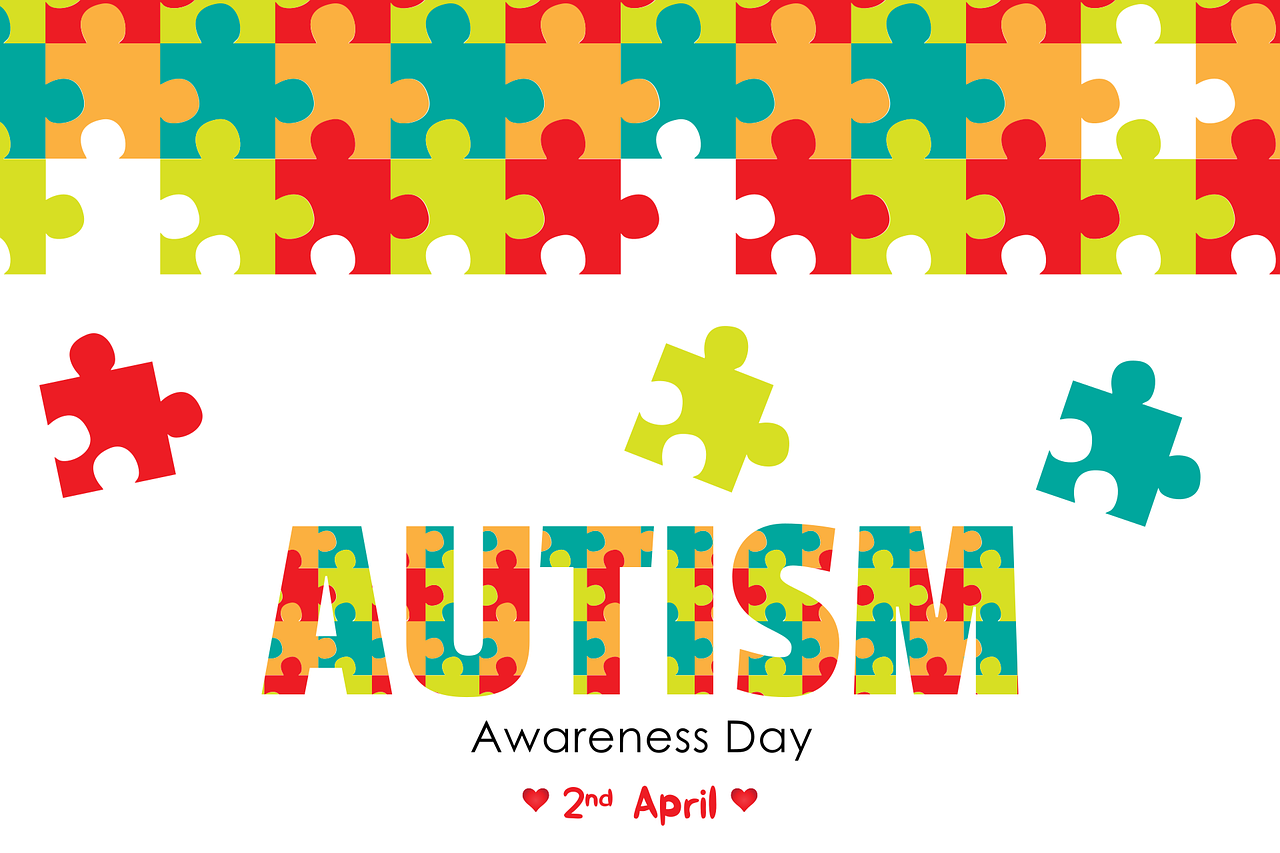
2nd April is WAAD - World Autism Awareness Day. In fact, the whole of April has been designated Autism Awareness/Acceptance Month! And autistic spectrum condition (ASC) is a condition particularly close to my heart…
Bars
There are well over 11 million detainees in the world. Autism is thought to affect at least 1% of the population. So in theory that’s around 110,000 autistic people behind bars across the world. However, we know that autistic people are well over-represented behind bars. For example, one English prison found that 4.5% of its population had an ASC. I have raised an autistic person, and so I’m able to take my acquired awareness into my job as a UK prison doctor. Most weeks I spot patients who are quite obviously autistic but have got well into adulthood without being labelled as neurodiverse.
Stress
Still, regardless of exactly how many autistic people are kept behind bars, they are some of the most vulnerable detainees. It fills me with sadness that they live in such stressful, unsuitable environments. I still remember with horror an incident from the earlier days of my career behind English bars, when I attended the death scene of an autistic man. Over the previous months, my colleagues and I had tried to help him, but he couldn’t see any shades of grey in his situation - just black and white. He managed to kill himself despite our best efforts to keep him safe. It was a profound tragedy. I don’t mind admitting that I wept. Sometimes it’s appropriate to weep with or for your patient.
Progress?
This year marks two decades since I decided to wield my stethoscope behind bars. It has been wonderful to witness gradual improvement in the way autistic people are treated in Britain, both in the community in general and also behind bars. Yes, there is still a long way to go. But there are far worse countries in which to be autistic. Three stories from my work in non-European places of detention come to mind:-
Ten years ago, my colleagues and I arrived at a remote jail to set up for one of our regular in-reach clinics. On the concrete floor of the hut we used was a middle-aged man. He was barely conscious, and covered in bruises. A quick examination revealed a likely ruptured spleen, which is fatal without urgent treatment. We put him into our van and took him to a local hospital where - at our insistence and expense - he had the necessary surgery. Interacting with him during his post-operative recovery, it was obvious that he was autistic. Enquiries with the prison governor revealed that he hadn’t actually committed a crime. No, he’d been put in jail because, having been abandoned by his family, he was thought to be cluttering up the streets. And he had come by his injuries because the prison guards had instructed the jail mayor - the prisoner chosen to lead on prison discipline - to beat him with a metal baseball bat. What was the beating supposed to achieve? Apparently, they’d hoped to persuade him against making noises and flapping his arms, which of course we know as stimming.
Two years ago, I stumbled across a police detainee who was clearly in life-threatening status epilepticus. He was blue in the face, seizuring right next to the overflowing toilet of his crowded police cell. Yet several of the more vocal men in his cell didn’t want me to step in and treat him. They yelled ‘Autism autism!’ In this particular society, the word autism is now being used to describe anyone who is acting in an out-of-the-ordinary manner.

And just three months ago, I found a young man who, to my medical mind, was clearly non-verbally autistic. He was gently rocking in the corner of his crowded cell, with no outward response to the hits and insults of his cell mates. My major achievement that day was persuading his cell leader - the prisoner nominated to be in charge of cell discipline - that depriving this poor young man of the food ration we had brought for him (from our feeding programme) was not an appropriate response to his unchallenging behaviour.
Yes, there is such a long way to go.
Un-reasonable
It is common parlance to ask for ‘reasonable adjustments’ for autistic people. Often it takes very little to make things a vast deal better. That’s not an unreasonable thing to ask, is it?
Whilst the UK’s criminal justice system still struggles to know what to do with autistic people, it is encouraging that a small minority of the UK’s prisons have succeeded in the challenge of achieving accreditation with the Autism Accreditation Service, which is provided by the National Autistic Society (NAS). One of these accredited prisons is HMP Wakefield, a high secure estate; another is YOI Feltham, a notoriously busy young offenders institution. If these particularly challenging secure environments can make reasonable adjustments for their autistic prisoners, then surely all other UK detention settings could manage to follow suit.
Across the world at large though, it’s going to take a lot more than simply signing up to an accreditation scheme. Many doctors and social leaders still don’t acknowledge autism, or else - perhaps worse - they prescribe bizarre and damaging so-called cures.
Yes, educating these leaders out of their ignorance is the first, massively challenging stage to helping their autistic populations on both sides of the bars.
The World Health Organization has acknowledged the need for this work but it’s a gargantuan, multi-cultural challenge. More ideas on a postcard please.
Dr Rachael Pickering is our chief medical officer. Her personal opinions do not necessarily represent those of Integritas Healthcare.
2nd April 2026
…Speak up and judge fairly…
Proverbs 31:8-9